 THE UNKNOWN BRAND
By THE UNKNOWN BRAND · Editorial standards
Published 2026-08-22 · Updated
Arabic typography in AI-generated images: why it breaks, and how to check it before a client sees it
Someone has to be able to say the Arabic is correct before it goes out with your name on it. In most approval chains, nobody in the room can read it, and the failure is invisible to everyone who cannot.
 Al Hamra Tower02
 Kuwait Army03
 Gulf Bank04
 Boursa Kuwait05
 World Defense Show06
 Midana07
 Warba Bank08
 Dabdoob09
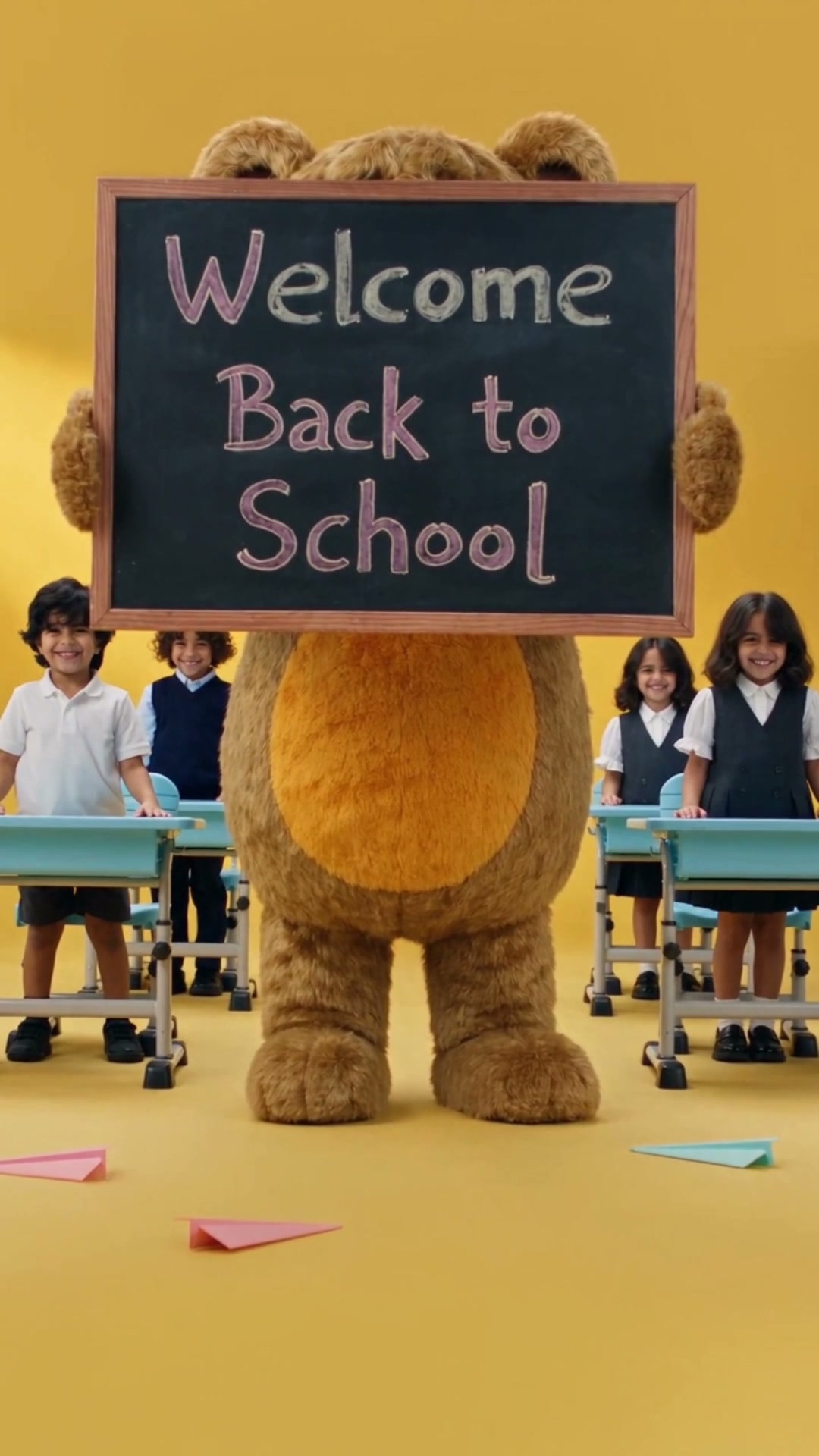 Dabdoob — Back to school10
 Twinkle — The idea11
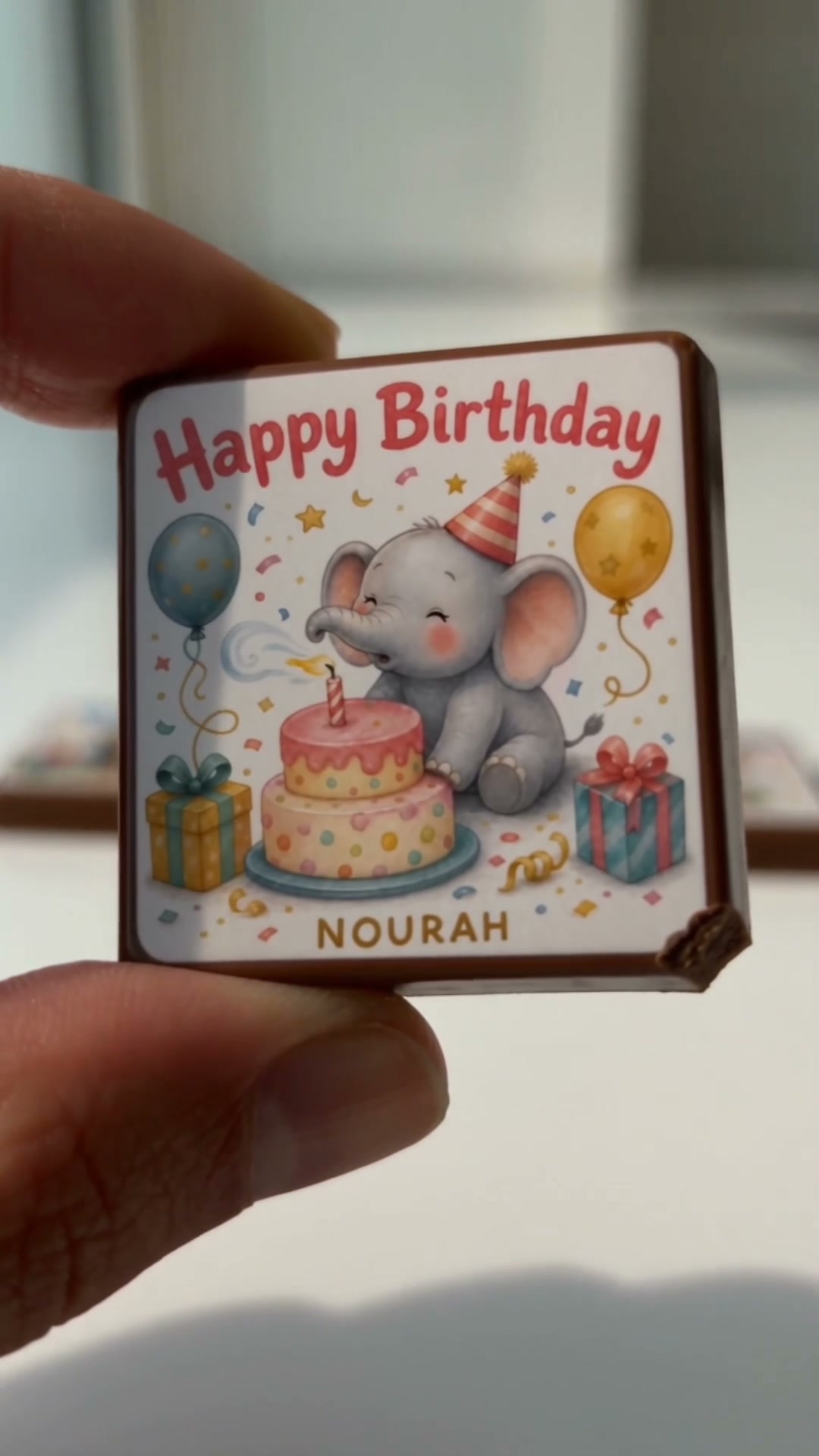 Twinkle — UGC12
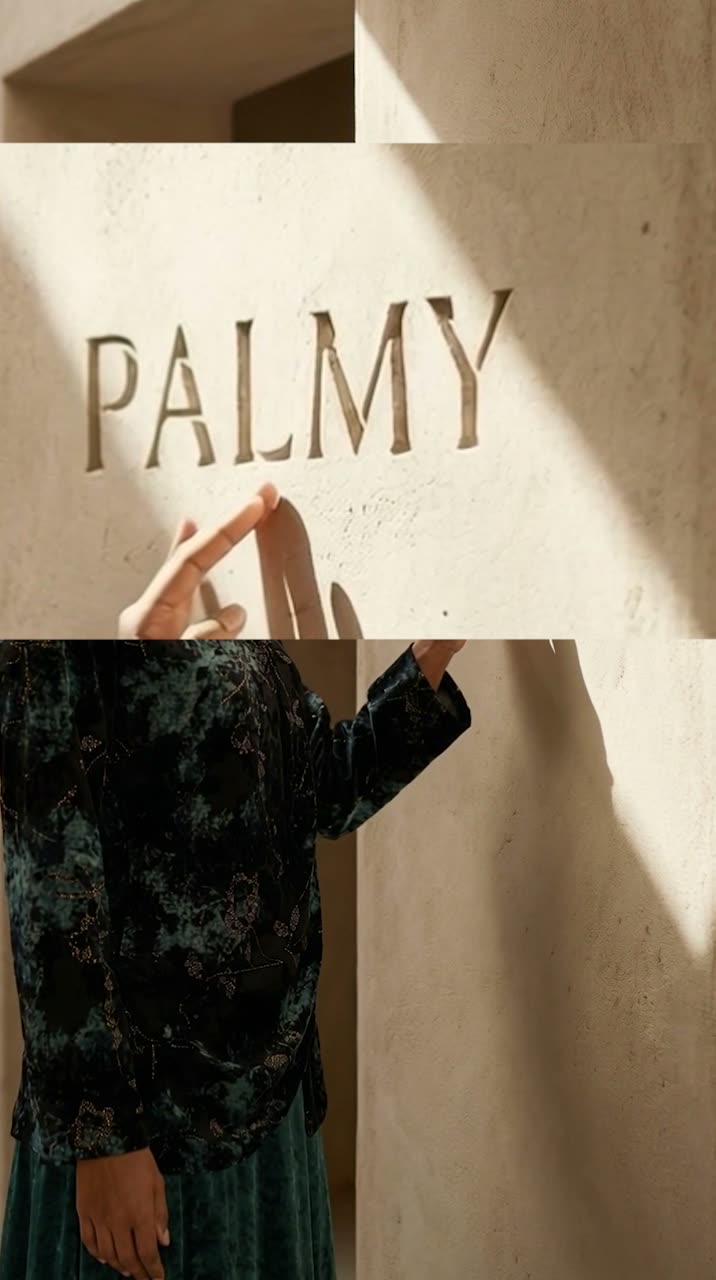 Palmy — Ramadan13
 Palmy — Street edit14
 Palmy — Editorial15
 Hyundai16
 Kellyville17
 GT-R18
 Al Rifai
In brief
- The W3C's Arabic layout requirements state that every Arabic letter has one, two, or four joining forms, decided by what sits on either side.
- Google's Imagen documentation lists ten supported prompt languages, Arabic is not among them, and unsupported input is used verbatim with no error code returned.
- That proves the failure is silent on at least one major platform. It does not prove any given model cannot render a given Arabic word correctly.
- In the nine-step QA pass, only the gap test and the edge check are safe to run without reading Arabic. Only step nine confirms correctness.
- Upscalers and enhancement passes re-draw letterforms, so a word that passed at 1024px can fail after an upscale. QA the delivered file, not the preview.
Latin has fixed glyphs. Arabic does not.
A Latin letter looks the same wherever it sits in a word. An Arabic letter does not. The W3C's Arabic layout requirements state it directly: "Every Arabic letter has one, two, or four different joining forms, which allow the letter to join to its neighbors, if applicable." Which form appears is decided by what sits on either side — isolated, initial, medial or final.
Three further rules stack on top of that.
- A closed set of letters never joins to the left. W3C calls these right-joining: they "can only join to their previous (right-hand side) letter, and therefore, only have isolated and final shapes." In practice: ا د ذ ر ز و, plus ة and the hamza-carrying alef forms.
- Some ligatures are not optional. The Unicode Standard: "When supported by the style of the font, lam-alef ligatures are considered obligatory."
- Vowel marks are separate characters that attach to a base. Unicode: a letter plus a mark "must always be represented as a sequence of letter plus combining mark."
And the line runs right to left while the numbers inside it do not. W3C: "Numbers, even Arabic numbers, are written from left to right, as is text in a script that is normally left-to-right." Correct Arabic is not a font lookup. It is a computation.
Right-joining letters are the closed set of Arabic letters that join only to their previous, right-hand letter. They have only isolated and final shapes: ا د ذ ر ز و, plus ة and the hamza-carrying alef forms. A gap inside a word is legal after one of them. A gap after any other letter is a defect.
A text renderer computes the shapes. A model paints them.
Microsoft's OpenType specification for Arabic describes what a real shaping engine does, in a fixed order. It analyses each character for contextual shape. Then it applies ccmp, isol, fina, medi, init and rlig — "to compose any mandatory ligatures, like 'lam alef'". Then calt. Then it positions with curs, kern, mark and mkmk. The sample Arabic font shipped with that document "contains over 1600 Arabic glyphs" to cover a 28-letter alphabet. It also notes that "many shaped glyph forms (such as ligatures) have no Unicode encoding."
An image model runs none of that. It has no character string, no font table, no feature order. It has learned what Arabic-shaped ink tends to look like, and it draws that. Nothing in the pipeline is checking whether the result is a word.
The prompt path often is not language-aware either. Google's Imagen documentation lists ten supported prompt languages — Chinese, English, French, German, Hindi, Japanese, Korean, Portuguese, Spanish. Arabic is not among them. The documentation adds: "If the language detected is not supported, Imagen uses the input text verbatim, which might result in unexpected output. No error code is returned."
That proves the failure is silent by design on at least one major platform. It does not prove any given model cannot render a given Arabic word correctly. It proves you cannot assume it did.
Shaping engine is the software that computes Arabic letterforms from a character string. Microsoft's OpenType specification for Arabic describes the ordered stages: contextual analysis, then ccmp, isol, fina, medi, init, rlig, then calt, then positioning. An image model runs none of that.
The failure taxonomy: what each defect looks like
These are the categories worth naming, because a reviewer who knows the names can point at one instead of saying "something looks off."
- Broken join. A gap inside a word where the letters must connect. The most common defect and the easiest for a non-reader to spot.
- False join. The opposite: a letter connected to one of the six that never join leftward. Reads as a smear.
- Wrong contextual form. An initial form used in final position. The word is spelled correctly and reads as a different word, or as nothing.
- Dot faults. ب ت ث ن ي differ only by the number and placement of dots. A dropped, added or migrated dot silently changes the word. This is the defect most likely to survive review and reach print.
- Ligature failure. لا rendered as two loose letters, or an invented ligature that exists in no font.
- Mark chaos. Tashkeel floating free, doubled on one base, or landing on the wrong letter.
- Direction and order faults. Words in reversed order, mirrored letterforms, or an embedded Latin brand name and digits flipped inside the right-to-left line. Unicode's bidirectional algorithm exists precisely because "the characters are still interpreted in logical order—only the display is affected" — and the model has no logical order to preserve.
- Glyph salad. Fluent, confident, beautifully lit marks that are not language at all. To a non-reader this looks like the best output in the batch.
| Defect | What you see | Which QA step catches it |
|---|---|---|
| Broken join | A gap inside a word where the letters must connect. | 4 · the gap test |
| False join | A letter joined to one of the six that never join leftward. Reads as a smear. | 4 · the gap test |
| Wrong contextual form | An initial form used in final position; reads as a different word, or as nothing. | 7 · OCR round trip, then 9 |
| Dot faults | A dropped, added or migrated dot. Silently changes the word. | 5 · zoom to 300% and diff the dots |
| Ligature failure | لا as two loose letters, or a ligature that exists in no font. | 5 · against the reference plate |
| Mark chaos | Tashkeel floating free, doubled, or on the wrong letter. | 5 · against the reference plate |
| Direction and order faults | Reversed word order, mirrored letterforms, flipped Latin or digits inside the line. | 6 · check the edges |
| Glyph salad | Confident, well-lit marks that are not language. Looks best of the batch to a non-reader. | 9 · native reader, cold, aloud |
Only the gap test and the edge check are safe to run without reading Arabic. Everything below them needs the reference plate, and the last row needs a person.
Glyph salad is fluent, confident, beautifully lit marks that are not language at all. To a non-reader this looks like the best output in the batch. That is why the taxonomy assigns it to the last QA step: a native reader, cold, aloud.
A QA procedure a non-Arabic reader can actually run
Nine steps, in order. The first one is not optional.
- 1. Lock the source string first. The approved Arabic must exist in the brief as selectable Unicode text, not as a picture. No approved string means no render to check against, and nothing to check.
- 2. Set the source beside the image. Paste the string into any editor at large size in a proper Arabic typeface. This is your reference plate.
- 3. Count word groups. Compare the number of visually separated clusters in the render against the reference. A mismatch is a defect before you look at a single letter.
- 4. Run the gap test. Gaps inside a word are legal only after ا د ذ ر ز و, ة and the hamza-alef forms. A gap after any other letter is a defect. You do not need to read Arabic to apply this.
- 5. Zoom to 300% and diff the dots. Go cluster by cluster against the reference. Dots above, dots below, one, two or three.
- 6. Check the edges. The first word of an Arabic line sits at the right margin. Any Latin word or numeral inside the line still reads left to right.
- 7. OCR round trip. Run the crop through an Arabic OCR and diff the output against the source string. Treat a mismatch as a flag, not a verdict — and treat a clean pass as no evidence at all.
- 8. Re-check the final export. Downscaling, JPEG compression and video encoding destroy thin joins and single dots. QA the delivered file, not the preview.
- 9. Have a native reader read it aloud, cold. No source string in front of them. If they hesitate, it fails.
Steps one to eight catch defects. Step nine is the only one that confirms correctness. The rest of this applies the same way to packaging and product imagery, where the Arabic is usually printed on the product itself.
Reference plate is the approved source string pasted into an editor at large size, in a proper Arabic typeface, and set beside the render. You can then compare word groups, dots, ligatures and marks cluster by cluster.
When to generate Arabic in-frame at all
The honest professional answer is: almost never, for anything a customer has to read.
Any Arabic carrying meaning is set in a licensed Arabic typeface by a real shaping engine, then composited in post. That covers the offer, the price, the claim, the CTA, the legal line and the brand name. Generate the plate with the text area clean, then lay type over it. This is standard practice in AI image production. It is not a compromise. It is the same separation of plate and type that print has used for a century.
In-frame generation is defensible in one narrow case: Arabic that is environmental and not load-bearing. A shopfront sign far in the background, signage passing in a car window, texture on a wall. Even there, illegible is safer than confidently wrong — a legible incorrect sign is a defect a reader will screenshot.
Two traps. Inpainting an Arabic word back into a generated frame is still generation, and needs the full QA pass again. And upscalers and enhancement passes re-draw letterforms — a word that passed at 1024px can fail after an upscale. Re-run QA after every pass that touches pixels.
Composited type proves the letterforms are correct. It does not prove the copy is right, that it reads naturally in Kuwait, or that it says what the English says.
Composited type is Arabic set in a licensed typeface by a real shaping engine and laid over a generated plate in post, rather than drawn in-frame by the model. It proves the letterforms are correct. It does not prove the copy is right.
Video is the same problem, multiplied by frame count
In a still, the text is either right or wrong once. In generated video, letterforms drift between frames. A word that is correct at frame 1 can lose a dot by frame 30 and reconnect wrongly by frame 60. Motion blur and delivery bitrate hide it in the timeline. A paused frame exposes it — which is exactly how a client will look at it.
The unit of QA is not the asset. It is every frame in which the Arabic is legible. In practice: check the first and last frame of every shot containing Arabic. Step through any shot where the text is on screen longer than about a second. Check at the delivered bitrate rather than the master. For short-form and UGC-style cuts, on-screen Arabic captions and offer supers belong in the edit as real type, never in the generation.
The reviewer sign-off that should gate any Arabic asset
Approval chains fail here because the person who signs has authority but not the language. Fix it with a record, one per asset, that a compliance or brand gate can audit later:
- The approved source string, in Unicode, as text.
- Whether the Arabic is composited type or generated in-frame — stated, not assumed.
- The typeface name and licence, if composited.
- The exact file version and export the reviewer looked at.
- Who read it in Arabic, and in which register — Modern Standard, or Kuwaiti or wider Gulf.
- Date, and the outcome: pass, or the named defect.
The reader signs the export, not the mock. If the file changes after sign-off — a resize, a recolour, a new crop, an upscale — the signature is void and the read happens again. That is the whole rule.
This record proves that a named-role Arabic reader inspected a specific file version and accepted it. It does not prove the copy converts, that the register suits the audience, or that legal has cleared the claim. Those are separate gates. Our own published films pass through this one before anything else.
What this catches, and what it does not
Everything above is a typography check. It confirms that the letterforms are correct and that the words on screen are the words that were approved. It says nothing about whether those words are any good.
A line can be flawlessly shaped and still be a literal translation nobody says in Kuwait — English word order wearing Arabic letters. That is a different defect, caught at a different stage, and it is the subject of the bilingual workflow guide. Correct script is the floor, not the standard.
Use this against any supplier, including us. Ask three questions before the first render: where does the Arabic in this asset come from, who reads it before delivery, and what happens to the sign-off when the file changes. A supplier who cannot answer the third one is not doing QA — they are hoping. The same question set applies whether the work is shot or generated. The standards we hold ourselves to are written down on the accountability page.
Sources
Every source below was opened and its quoted wording checked against the live page. A source we could not re-fetch was dropped, not softened. Where a rule could not be confirmed from the body that issues it, this guide says so rather than describe it from memory. Editorial responsibility sits with the studio, not an individual author. Found a moved link or a wrong citation? Email hello@theunknownbrand.com with the URL. We will correct the page and its modification date.
- W3C — Arabic & Persian Layout Requirements (W3C Group Draft Note, 02 October 2025) — Arabic letters take one, two or four joining forms; right-joining letters have only isolated and final shapes; non-joining letters take only the isolated form; Arabic runs right to left while numbers run left to right; multiple diacritics attach to one base.
- Unicode Consortium (The Unicode Standard, Chapter 9: Middle East-I, Modern and Liturgical Scripts) — Arabic is cursive; joining types (dual-joining, right-joining, non-joining, join-causing); lam-alef ligatures are obligatory; marks are combining and never precomposed; Arabic Presentation Forms exist only for legacy compatibility.
- Unicode Consortium (UAX #9, Unicode Bidirectional Algorithm) — Bidirectional text is resolved from logical order to display order; RTL scripts mix with left-to-right digits; certain characters are drawn mirrored when resolved right-to-left.
- Microsoft (Developing OpenType Fonts for Arabic Script) — A shaping engine computes Arabic in ordered stages with named OpenType features; rlig composes mandatory lam-alef; a production Arabic font carries far more glyphs than letters; many shaped forms have no Unicode encoding; invalid mark combinations render on a dotted circle.
- Google Cloud (Vertex AI, Set text prompt language for Imagen) — Arabic is not on Imagen’s list of supported prompt languages, and unsupported input is passed through verbatim with no error returned — the failure is silent.
Put the brief on the screen
Tell us the job, the audience and what has to be true when it ships. We will reply with the questions that matter.
Message us on WhatsApp Start a projectFrequently asked questions
Why do AI models handle English text in images better than Arabic?
Latin letters have one shape each regardless of position. Arabic letters take up to four shapes depending on their neighbours, some pairs form obligatory ligatures, marks attach to bases, and the line runs right to left while embedded numbers run left to right. A model reproducing letter appearance has far more ways to be wrong in Arabic, and no mechanism that checks the result is a word.
Can I just tell the model to write the Arabic correctly in the prompt?
Not reliably, and on some platforms the prompt language itself is not supported. Google’s Imagen documentation lists ten supported prompt languages, Arabic is not one of them, and it states that unsupported input is used verbatim with no error code returned. The failure is silent. Treat prompt-level Arabic as a request, never as a guarantee.
How can a reviewer who does not read Arabic check the text?
Compare the render against the approved source string set in a real Arabic typeface: count word clusters, check that gaps inside words occur only after the letters that never join leftward, zoom in and compare dot patterns, confirm the line starts at the right margin, and run an OCR diff as a flag. Those steps find defects. Only a native reader reading it aloud confirms correctness.
Should Arabic text ever be generated inside the image rather than composited?
Only where it is environmental and not load-bearing, such as distant background signage. Anything a customer must read — offer, price, claim, CTA, brand name, legal line — should be set in a licensed Arabic typeface and composited in post, which also makes it editable without regenerating the image.
Does an upscale or export invalidate an Arabic check that already passed?
Yes, if the pixels were redrawn. Upscalers and enhancement passes re-draw letterforms, and compression or downscaling can destroy thin joins and single dots. Check the delivered export at delivery settings, not the master or the preview, and treat any post-approval file change as a reason to re-read.
What should a supplier be able to show for an Arabic asset?
The approved source string as Unicode text, whether the type is composited or generated, the typeface and licence if composited, the exact file version reviewed, who read it and in which register, and the date and outcome. If a supplier cannot say what happens to that sign-off when the file changes, there is no QA process to audit.
الطباعة العربية في صور الذكاء الاصطناعي: كيف تفحصها قبل أن تحمل اسم مؤسستك — هذا الدليل بالعربية.