 THE UNKNOWN BRAND
By THE UNKNOWN BRAND · Editorial standards
Published 2026-08-22 · Updated
Planning a Ramadan campaign in the Gulf when production is AI-led
Ramadan is the largest commercial season in the Gulf and the only one whose start date, end date and length are not known when the media plan is signed. If a generative pipeline is making the work, that uncertainty meets a second problem: the depiction of religious practice is the one thing a model has no way to get right on its own.
 Al Hamra Tower02
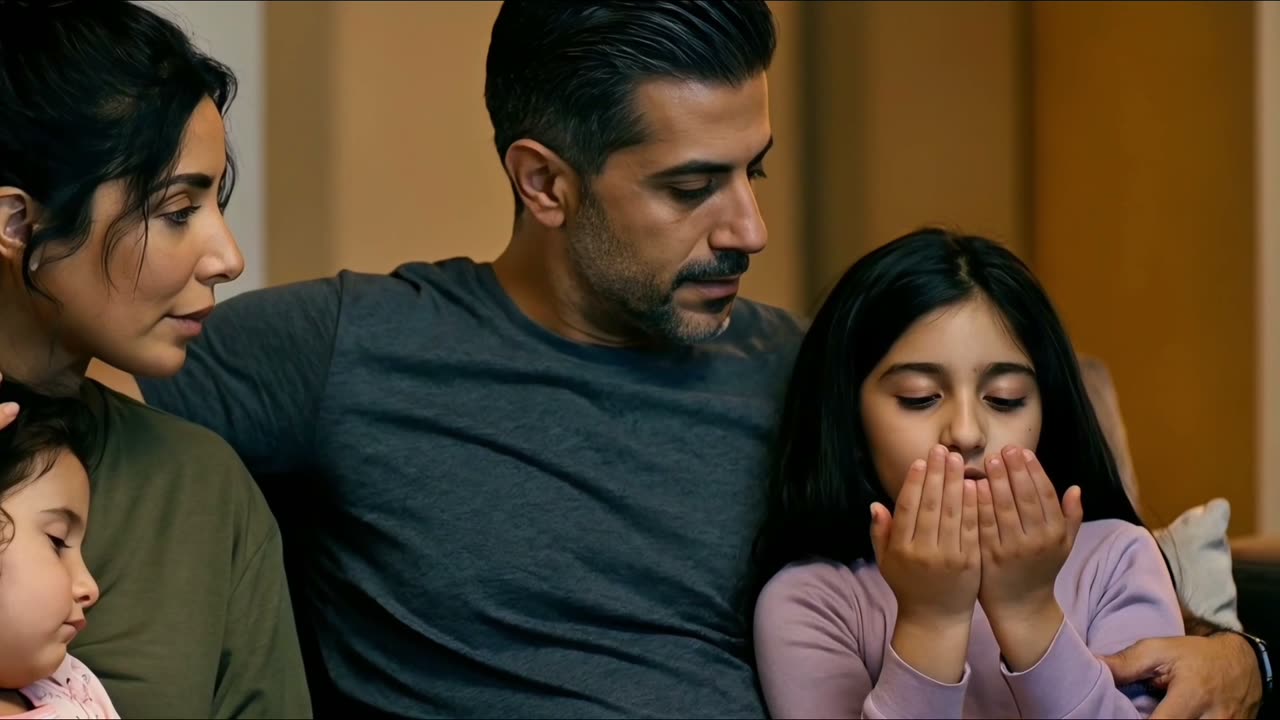 Kuwait Army03
 Gulf Bank04
 Boursa Kuwait05
 World Defense Show06
 Midana07
 Warba Bank08
 Dabdoob09
 Dabdoob — Back to school10
 Twinkle — The idea11
 Twinkle — UGC12
 Palmy — Ramadan13
 Palmy — Street edit14
 Palmy — Editorial15
 Hyundai16
 Kellyville17
 GT-R18
 Al Rifai
In brief
- The UAE Government's official portal states that Ramadan begins at the first sighting of the new crescent moon and lasts 29 or 30 days.
- The US Naval Observatory states crescent visibility cannot be predicted with certainty, so an almanac shows when a crescent could be visible, not what a country will announce.
- The UAE Government portal records that UAE labour law reduces working hours by two hours per day in Ramadan, which shrinks approval capacity, not only daytime attention.
- Saudi Central Bank rules for financial institutions require written compliance approval before publishing, and require a promotional offer to state its beginning and end period.
- Frames showing prayer, a mosque interior, in-frame Arabic script that could read as scripture, an adhan cue or an iftar table should pass a named reviewer with standing to reject, before brand review.
The month has no fixed start, and no fixed length
The UAE Government's official portal states that Ramadan "begins at the first sighting of the new crescent moon and lasts 29 or 30 days depending on the sighting of the next crescent," following announcements from the moon-sighting committee under the UAE Council for Fatwa. The US Naval Observatory is blunter about the astronomy: the visibility of the lunar crescent "depends upon many factors and cannot be predicted with certainty," because it turns on the geometry of Sun, Moon and horizon, the brightness of the crescent, atmospheric scattering and human vision.
Read those two together and the planning consequence is exact. An almanac tells you when a crescent could be visible. It does not tell you what a country will announce, or when. And because the month runs 29 or 30 days, the Eid date is not fixed at the start either — the campaign's final beat floats until near the end of the month.
This proves that any Ramadan schedule contains at least two dates that can move after signature. It does not prove your campaign will be disrupted. It proves that a plan with no stated behaviour for a one-day shift is incomplete.
The day inverts, and approval capacity shrinks with it
The same UAE portal records that under UAE labour law "working hours are reduced by two hours per day" during Ramadan, applying to Muslim and non-Muslim employees without deducting regular wages. Similar reductions are normal across the Gulf.
Marketers read that as a media fact — attention moves to the hours around iftar and suhoor, daytime drops, retail and delivery run late. It is also an approval-capacity fact, and that is the one that breaks AI-led production. Your legal reviewer, your compliance officer, your brand lead and the client's own religious or cultural reviewer are all working shorter days, in the same weeks your calendar compresses. Generative tools shorten the make; they do not shorten the sign-off. A pipeline that can produce forty cuts a day into a chain that can approve three is not fast, it is congested.
Do not take a rhythm claim from a trend deck. Your own channel and sales data from the previous year is the only trustworthy read of when your audience is awake, and the definitions you compare it against matter more than the chart.
Approval capacity is how much work your legal, compliance, brand and cultural reviewers can sign off in a day. Generative tools shorten the make; they do not shorten the sign-off.
Lock the timeless master, keep the dated layer loose
The useful split is not "early work" versus "late work." It is things a date can invalidate versus things it cannot.
- Lock before the month: the idea and its structure; the master film or key visual; product and packaging imagery; character or talent locks; the Arabic copy that carries no date; the named review board and the order of its gates.
- Keep replaceable: every frame containing a date, a countdown, an offer window, a night-number, an Eid greeting, or a switch from Ramadan to Eid messaging.
Saudi Central Bank rules make the reason concrete for regulated advertisers. Article 4 of SAMA's Rules for Advertising Products and Services Provided by Financial Institutions requires that when announcing promotional offers, institutions "state the beginning and end period of the offer." On a lunar calendar that end period may not be fixed when the asset is rendered. So the offer window must live as a replaceable text layer over a locked master — never baked into a generated frame you would have to re-render, and then re-approve, to change a single numeral.
| Element | Lock before the month | Keep replaceable |
|---|---|---|
| Idea and structure | Yes | — |
| Master film or key visual | Yes | — |
| Product and packaging imagery | Yes | — |
| Character or talent locks | Yes | — |
| Arabic copy carrying no date | Yes | — |
| Review board and gate order | Yes | — |
| Any frame with a date, countdown or night-number | — | Text layer over the master |
| Offer window | — | Text layer — SAMA Article 4 requires the offer’s beginning and end period to be stated, and on a lunar calendar that may not be fixed at render time |
| Eid greeting, and the Ramadan-to-Eid switch | — | Text layer over the master |
The dated layer is every element a date can invalidate: an offer window, a countdown, a night-number, an Eid greeting. It lives as replaceable text over a locked master, never baked into a generated frame.
The cultural review gate, and what models actually get wrong
Religious practice is not a creative variable. Any frame containing prayer, a mosque interior, Arabic script that could read as scripture, an adhan or its visual cue, an iftar table or a family gathering should pass a named human reviewer with the standing to reject before it reaches brand review. That reviewer's rejection is final and does not require justification. Put the gate in the schedule first, then compress everything else around it.
The failure mode is not that a model is disrespectful. It is that a model has no concept of practice at all — it reproduces the surface of images it has seen, and the surface is where these things go wrong:
- Arabic script: generative image models routinely produce glyph-shaped noise — unjoined letters, reversed order, invented forms. Applied to anything that reads as Quranic text, that is the highest-severity defect on the list.
- Prayer: posture, hand position, row alignment, direction, footwear, the orientation of a prayer rug. Models composite plausible-looking gestures that correspond to no actual position.
- Mosque and interior detail: features mixed across regions and traditions, invented ornament, minaret and mihrab geometry that exists nowhere.
- Iftar: food already eaten before the adhan, half-drunk glasses, a table dressed for the wrong hour, seating arrangements that do not match the household or country being shown.
- Symbols and light: crescent forms used as decorative furniture; noon light over a scene that must be dusk.
A passed cultural review proves that named reviewers with standing looked at the frame and did not object. It does not prove the depiction is right for every school, country or family in your audience. Say that out loud in the brief, and keep a fast path to pull work down.
The cultural review gate is a named human reviewer with the standing to reject, placed before brand review. It covers any frame showing prayer, a mosque interior, Arabic script that could read as scripture, an adhan cue or an iftar table.
Write the brief in Arabic first — this month more than any other
For some advertisers Arabic is not a preference. SAMA Article 2 states that "Arabic shall be the language used in advertising products and services provided by financial institutions, excluding advertisements for non-Arabic speakers that comply with these Rules." For a licensed institution in Saudi Arabia, Arabic is the default and English is the exception.
The craft argument is separate and stronger. Ramadan language is not neutral — it carries register, and register is where translation dies. A Kuwaiti line like الشهر اللي ننطره lands as familial and local; its Modern Standard equivalent الشهر الذي ننتظره is correct and cold. A translated line will be one of those two by accident. An Arabic-first brief chooses.
An Arabic brief also protects the cultural review. A reviewer handed an English brief is reviewing an intention. Handed the Arabic, they are reviewing the thing that will run. Two native outputs from one strategy is the working method — see the bilingual workflow. And keep Arabic type out of the generative frame entirely: set it as real type in the layout, and check the render against a geometry and packaging checklist before anyone sees it.
An Arabic-first brief is a brief written in Arabic before English, so register is chosen rather than inherited by accident from a translation. It also lets a reviewer read the thing that will run.
The approval sequence for regulated categories
SAMA's rules read like a specification for how a compressed calendar goes wrong, and they are worth quoting even if you are not a bank.
- Article 15: the Compliance Department "must review the advertising materials and approve them in writing before publishing them." Written approval, before publication — not a verbal nod in a group chat at 11pm.
- Article 13: advertisements run through official channels or "a third party licensed by the competent authority," and the institution "bear[s] responsibility in the event that the third party does not comply." Your production supplier's non-compliance is your liability, not theirs.
- Article 12: advertised offers, specifications and benefits are "binding on financial institutions," and must appear in the contract. A generated frame is a promise.
- Article 17: SAMA may require a non-compliant advertisement to be withdrawn "within one business day" of notification. Build the takedown path before you build the campaign, and know who holds the platform credentials at 2am.
- Article 1 and 5.5: avoid "tempting, misleading or inaccurate methods"; do not "violate public order and morals, or offend the values and customs of society."
Food and health categories have their own gate. Saudi Arabia's SFDA states that food businesses apply for approval to use nutrition and health claims on labels, verified by its Health & Nutrition Claim Committee "on the basis of the scientific evidence provided" under SFDA.FD 2333. A benefit invented inside a script is not a claim you can run.
Then the platform clock. Meta's Transparency Center states ad review "is typically completed within 24 hours, although it may take longer in some cases," and that revised ads "will be treated as new ads and reviewed by our ad review system." Every change restarts the queue. So the order is: cultural review, then legal and regulatory, then brand, then platform submission. Reversing it — submitting early to "save time," then editing — is the single most expensive mistake available in a 29-or-30-day window.
Decide the disclosure line before the month, not after the comments
Three platforms already have positions. YouTube requires creators "to disclose when they use AI to meaningfully alter or generate photorealistic content," and warns that those who consistently do not may face a manually applied label, content removal or Partner Programme suspension. TikTok's newsroom says it has "required creators to label realistic AIGC for over a year" and now reads C2PA Content Credentials so that "Content Credentials attach metadata to content, which we can use to instantly recognize and label AIGC." Meta says it adds "AI info" labels "when we detect industry standard AI image indicators or when people disclose that they're uploading AI-generated content," while noting its own labelling methodology "is still evolving."
Provenance tooling helps you answer the question before you are asked it. A C2PA Content Credential is a signed record of an asset's origin, its modifications, and where "an action was performed by an AI/ML system" via the digitalSourceType field. Its limits are stated in the specification itself: provenance "cannot tell you whether the digital content is true, accurate or factual."
So a credential proves how a file was made and that it has not been altered since signing. It does not prove the depiction is culturally correct, the claim is substantiated, or the campaign was any good. Write the disclosure sentence into the brief in both languages, and decide who signs it.
A C2PA Content Credential is a signed record of an asset's origin, its modifications, and where an action was performed by an AI/ML system. It proves how a file was made and that it has not been altered since signing. It does not prove the depiction is culturally correct.
Six questions to put to any supplier, including this one
- Show me the calendar with the lunar dependency drawn on it. Which assets change if the announcement moves by one day, who re-renders them, and by when?
- Name the cultural reviewer and their standing to reject. "We're sensitive to local culture" is not a name and not a gate.
- Show me the Arabic brief. If it exists only in English, the Arabic in your campaign is a translation.
- What is your takedown path? Assume a regulator requires withdrawal within one business day, at night, mid-month.
- How many approval gates does one revision reopen? If the answer is "we'd just re-cut it," they have not read the rules that bind you.
- What will you disclose about AI use, on which platforms, and who signs it?
We publish finished films at /work and keep an evidence register with an accountability page. Those prove the files exist and can be judged. They do not prove a Ramadan calendar will hold, and no supplier's showreel does. The judgement you are actually making is about the chain around the render, not the render.
If the answers to questions one and two do not exist in writing, the season is not the time to find out. If they do, the rest is scheduling — and scheduling is the part a production method can genuinely change.
Sources
Every source below was opened and its quoted wording checked against the live page. A source we could not re-fetch was dropped, not softened. Where a rule could not be confirmed from the body that issues it, this guide says so rather than describe it from memory. Editorial responsibility sits with the studio, not an individual author. Found a moved link or a wrong citation? Email hello@theunknownbrand.com with the URL. We will correct the page and its modification date.
- The Official Platform of the UAE Government (u.ae) — That Ramadan’s start depends on crescent sighting, that its length is 29 or 30 days, and that UAE working hours are reduced by two hours per day during the month.
- United States Naval Observatory, Astronomical Applications Department — That crescent visibility, and therefore the announced start of the month, cannot be predicted with certainty.
- Saudi Central Bank (SAMA) — Rules for Advertising Products and Services Provided by Financial Institutions, Version 1, March 2023 — Arabic-language default, stated offer start and end periods, written compliance approval before publishing, third-party liability, binding advertised specifications, and a one-business-day withdrawal power.
- Saudi Food and Drug Authority (SFDA) — That health and nutrition claims in Saudi Arabia go through a committee that verifies scientific evidence, so a claim cannot simply be written into a script.
- Meta Transparency Center — Introduction to the Advertising Standards — That Meta ad review typically takes up to 24 hours and that edited ads are re-reviewed as new ads, so every revision restarts the queue.
- Meta Newsroom — That Meta applies AI labels on the basis of detected industry indicators or user self-disclosure.
- Meta Transparency Center — Labeling AI Content — That Meta’s AI labelling methodology is described by Meta itself as still evolving.
- TikTok Newsroom — That TikTok requires creators to label realistic AI-generated content and reads C2PA Content Credentials to auto-label.
- YouTube Help (Google) — That YouTube requires disclosure of meaningfully altered or generated photorealistic content, with stated penalties.
- Coalition for Content Provenance and Authenticity (C2PA) — Content Credentials Explainer, v2.4 — What a Content Credential records, including AI use via digitalSourceType, and the explicit limit that provenance does not establish truth or accuracy.
Put the brief on the screen
Tell us the job, the audience and what has to be true when it ships. We will reply with the questions that matter.
Message us on WhatsApp Start a projectFrequently asked questions
When should Ramadan production start if the dates are not confirmed?
Work backwards from the fixed things, not the moving ones. The idea, the master film, product imagery and undated Arabic copy can be locked and approved long before any announcement, because nothing in them depends on a date. Only the dated layer — offer windows, countdowns, night numbers, the Eid switch — needs the announcement, and that layer should be text over a locked master rather than a re-render.
Why can’t the start and end dates simply be looked up in advance?
The UAE Government portal states that Ramadan begins at the first sighting of the new crescent moon and lasts 29 or 30 days depending on the sighting of the next crescent, with announcements made by the moon-sighting committee. The US Naval Observatory notes that crescent visibility depends on many factors and cannot be predicted with certainty. Astronomical projections indicate when a sighting is possible; the announced date comes from the national committee.
What should a cultural review actually check in AI-generated Ramadan work?
Any Arabic script in-frame, prayer posture and orientation, mosque and interior detail, the state of an iftar table relative to the adhan, seating and family composition, the use of religious symbols as decoration, and whether the light matches the hour being depicted. The reviewer should be a named person with the standing to reject without justifying the rejection, and the gate should sit before brand review, not after it.
Does an AI disclosure label satisfy a regulator?
No. Platform labels and C2PA Content Credentials describe how a file was made. The C2PA specification states directly that provenance cannot tell you whether content is true, accurate or factual. Regulatory obligations — written compliance approval before publishing, substantiated claims, stated offer periods — are separate requirements that a disclosure label does not discharge.
Who is liable if an AI production supplier breaches an advertising rule?
For Saudi financial institutions, SAMA Article 13 states that advertisements may run through a licensed third party, that the institution must ensure the third party complies, and that the institution bears responsibility if it does not. Treat that as the general shape of the risk across regulated Gulf categories: the licence holder carries the exposure, so the supplier’s approval discipline is part of your own compliance posture.
حملة رمضان على تقويم قمري: ما يُقفل قبل الشهر وما يبقى مفتوحاً — هذا الدليل بالعربية.